


In our previous article, we explored attitudes toward sustainable investing in Trinidad and Tobago and highlighted the growing support for ESG (Environmental, Social, and Governance) investing within the country. However, while Trinidad provided an important starting point, the Caribbean itself presents a much broader and more complex picture.
As small island developing states (SIDS), Caribbean nations are among the most environmentally vulnerable regions in the world. Rising sea levels, increasingly unpredictable weather patterns, coastal erosion, extreme heat, and stronger tropical storms continue to reshape daily life across the region. In recent years alone, our region has faced repeated reminders of this vulnerability, from severe flooding and heatwaves to the devastating impact of Hurricane Beryl across islands such as Grenada and Carriacou.
Simultaneously, conversations surrounding sustainable investing have continued to expand globally. ESG investing is no longer viewed solely as a niche environmental trend, but increasingly as a long-term economic and social strategy tied to resilience, sustainability, and future development trajectories. For the Caribbean, this raises an important question: could growing perceptions of climate-related threat be contributing to increased support for sustainable investing across the region?
To explore this further, we expanded our research beyond Trinidad and conducted a comparative study examining attitudes toward sustainable investing in Trinidad and Tobago, Barbados, and Grenada. Across all three countries, participants completed measures assessing their support for sustainable investing, as well as how threatened they felt by climate change and its potential impacts. Participants were also presented with a direct investment choice scenario in which they had to choose between investing in a traditional hydrocarbon-based companies or sustainable green opportunities offering lower financial returns. This allowed us to examine not only general attitudes toward ESG investing, but also whether people would still support sustainable options when financial trade-offs were involved.
THE DATA INSIGHTS.
Overall, support for sustainable investing was relatively strong across all three islands (see Figure 1).
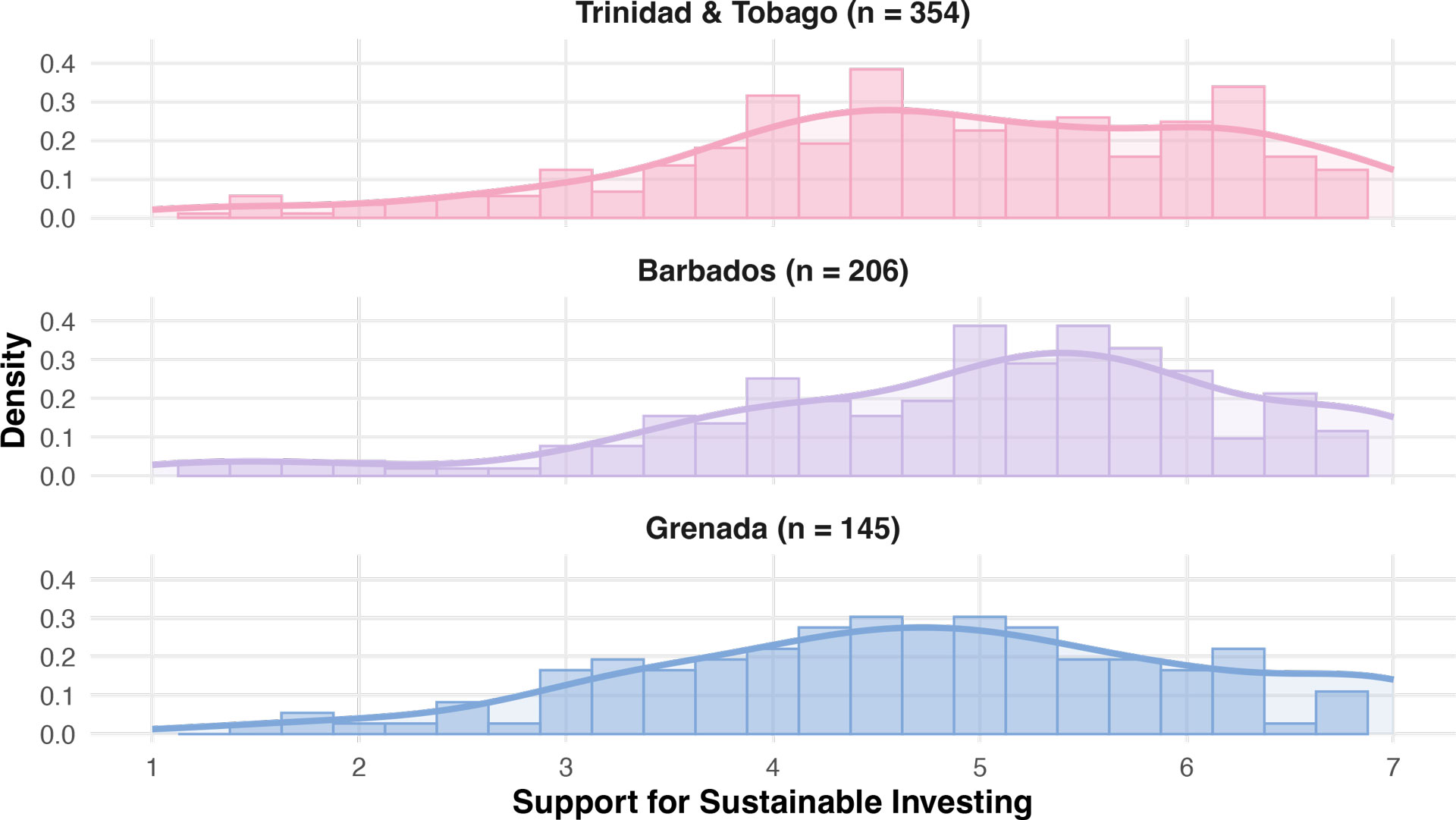
Figure 1. Distribution of support for sustainable investing across Trinidad & Tobago, Barbados, and Grenada.
Note. The density curves represent the relative concentration of responses across the 1–7 sustainable investing support scale. Higher peaks indicate areas where responses were more heavily concentrated within each country sample.
In Trinidad and Tobago, 44.6% of respondents demonstrated high levels of support for sustainable investing, while only 7.9% fell into the low-support category. Barbados showed the strongest overall support, with 52.4% of respondents expressing high support for sustainable investing. Grenada also showed broadly positive attitudes, although support was more concentrated within the moderate-support range, with 40.7% of respondents reporting high support.
Perhaps even more interestingly, participants across all three countries were overwhelmingly willing to support environmentally sustainable companies even when doing so involved accepting lower financial returns (see Figure 2). In Trinidad and Tobago, 73.5% of participants selected the sustainable investment option over the traditional hydrocarbon company. Similar patterns emerged in Barbados (77.2%) and Grenada (77.9%). These findings suggest that many Caribbean individuals may already be willing to prioritise environmental sustainability within financial decision-making, even when short-term profitability is reduced.
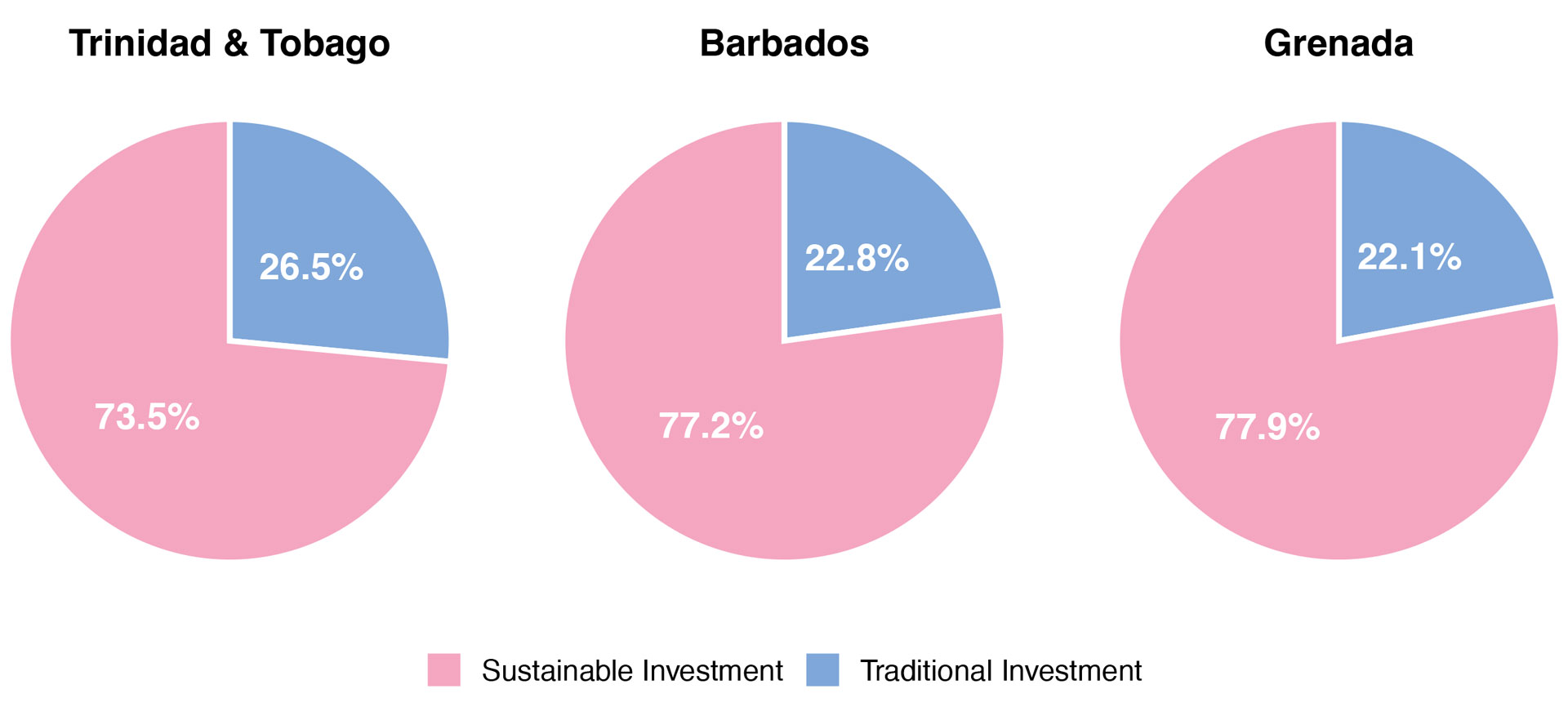
Figure 2. Investment choice preferences between traditional hydrocarbon companies and sustainable green companies across Trinidad & Tobago, Barbados, and Grenada.
We then estimated regression models to test whether perceived threat from climate change helped explain these attitudes toward sustainable investing.
Across all three countries, individuals who perceived climate change as a more serious and immediate threat were significantly more likely to support sustainable investing. In Trinidad and Tobago, climate threat perceptions explained approximately 10% of the variation in sustainable investing support. In Barbados, this relationship remained significant, although slightly weaker, explaining roughly 7% of the variation. Grenada demonstrated the strongest relationship overall, with climate threat perceptions accounting for approximately 15% of the variation in sustainable investing support.
BROADER IMPLICATIONS.
This pattern is particularly interesting when viewed within the broader Caribbean context. While all three countries are environmentally vulnerable, the immediacy and visibility of climate impacts may influence how strongly people connect sustainability issues with financial behaviour. In Grenada especially, where recent climate-related events such as Hurricane Beryl caused severe disruption and damage, perceptions of environmental threat may feel especially tangible and immediate. As a result, sustainable investing may increasingly be viewed not simply as an environmental preference, but as part of a broader conversation about national resilience, future security, and economic sustainability.
The findings also reveal important differences between Caribbean nations. Trinidad and Tobago, despite its longstanding economic dependence on the energy sector, still demonstrated relatively strong support for sustainable investing. Barbados, a country that has increasingly positioned itself internationally around climate resilience and sustainability initiatives, showed the highest proportion of strong ESG support overall. Grenada, meanwhile, appeared to demonstrate the strongest psychological link between climate threat perceptions and support for sustainable investing.

Overall, these insights suggest that sustainable investing in the Caribbean cannot be understood purely through a financial lens. Public support appears closely connected to how individuals perceive environmental vulnerability, economic resilience, and the future sustainability of their societies. Importantly, the results also challenge the idea that Caribbean populations are resistant to sustainability-oriented financial practices. In fact, across all three islands, the majority of participants demonstrated at least moderate support for sustainable investing, while most were willing to prioritise sustainable investment choices even when lower returns were involved.
As climate-related disruptions continue to intensify across the region, these conversations are likely to become even more important. For Caribbean nations, sustainable investing may represent more than an individual financial preference as it increasingly becomes part of how societies respond to environmental uncertainty, economic transition, and the long-term challenge of building resilience within some of the world’s most climate-vulnerable states.